A practical plan for your property
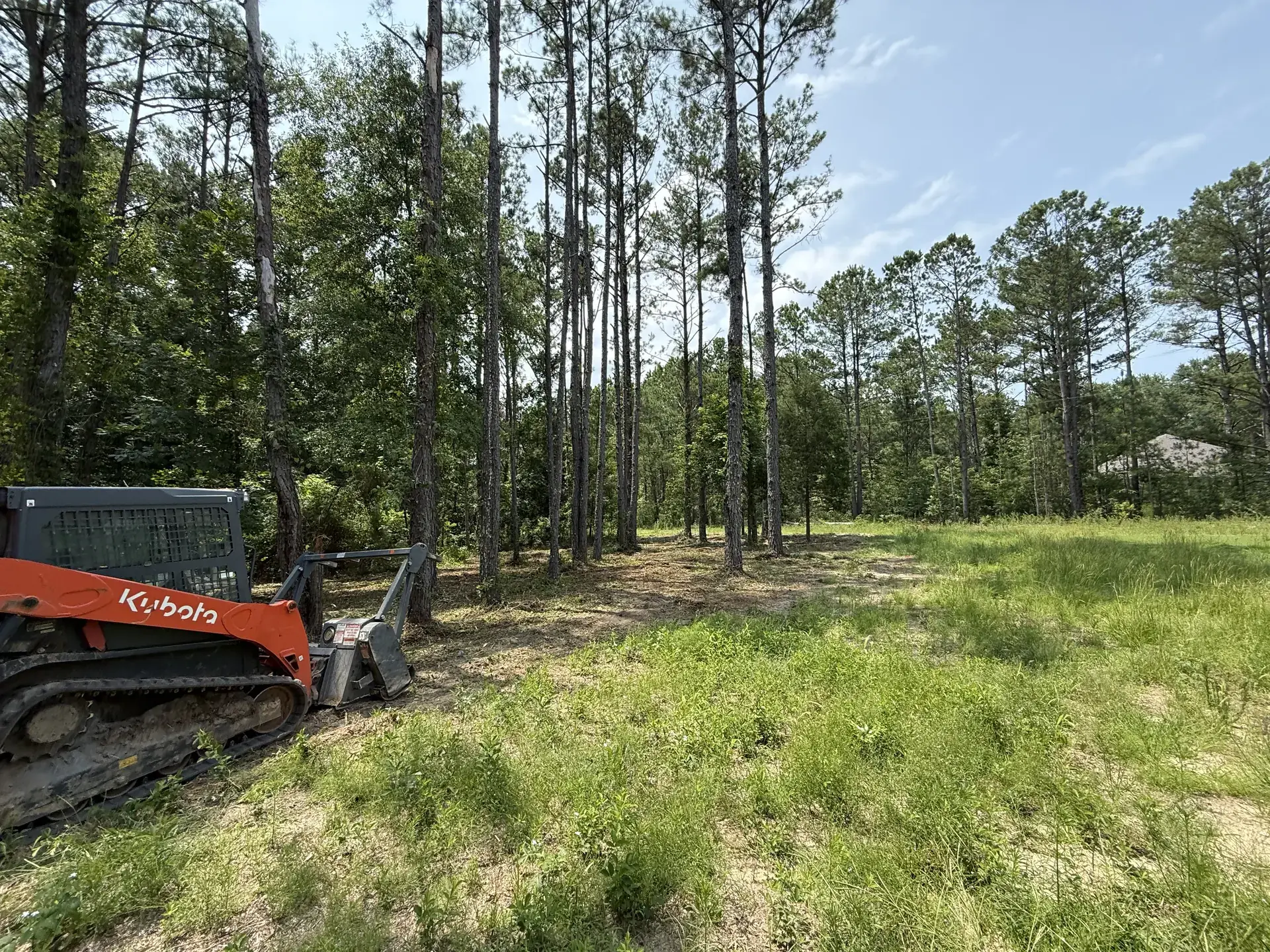
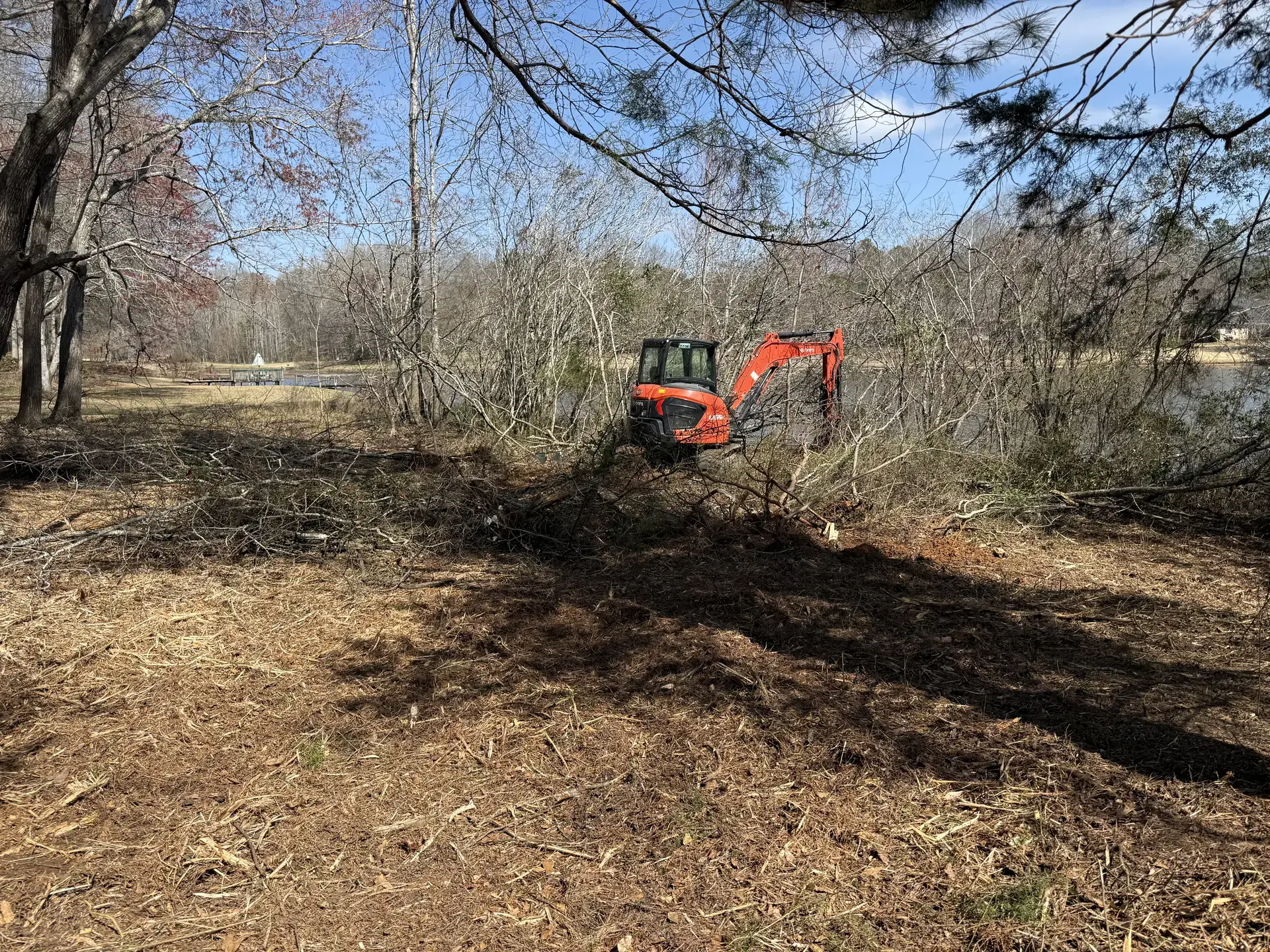
Rhino Landwork provides bush hogging for rural properties that need dependable vegetation control without full clearing. We help restore access, improve sightlines, and keep open ground manageable through seasonal or one-time cutting.
Common project goals
- Fields, pastures, trails, and vacant lots
- Seasonal property maintenance
- Tall grass, weeds, and light-brush control
- Improved access and visibility
What bush hogging actually handles
A bush hog is a heavy rotary cutter pulled behind a tractor. It is built to knock down tall grass, weeds, briars, broomsedge, and small saplings across open ground, then leave the cuttings on the field to break down. It is the right tool for land that is simply overgrown, not land that is wooded.
Once stems get much past an inch or two, or the ground underneath is full of stumps, rock, or old fence wire, a rotary cutter is the wrong tool and we will tell you so. That property needs forestry mulching or clearing instead, and we do both, so the recommendation is not a sales pitch for the only service we own.
What it costs and what moves the price
Bush hogging is usually priced by the acre, and the honest answer is that the per-acre number depends on the field. We walk it or look at photos before quoting, and the estimate is free.
Five things move the price: how many acres, how tall and thick the growth has gotten, whether the ground is smooth pasture or broken with stumps, ditches, and debris, how easily a tractor and cutter can get through the gate and around the property, and how long it has been since the last cut. A field cut every year is quick work. A field that has not been touched in three years is a different job, and sometimes it takes two passes.
When to cut
Most properties around Macon and Lee County get cut one to three times through the growing season, roughly April through October. One cut a year keeps a field from turning into brush. Two or three keeps it looking maintained.
Some cuts are about a deadline rather than a schedule. Hunting land gets cut in late summer and early fall so trails, shooting lanes, and food-plot edges are ready before the season. Property going on the market gets cut before photos. Firebreaks and firelanes get maintained before things dry out. If you have a date you are working toward, tell us and we will schedule around it.
Bush hogging or forestry mulching
These get confused constantly, and picking wrong wastes money. Bush hogging cuts standing vegetation on open ground and leaves it lying in the field. It is faster and cheaper per acre, and it is maintenance: the roots are still there and it grows back.
Forestry mulching grinds brush and small trees down into mulch and takes the material with it. It costs more per acre but it reclaims ground that has gone past mowing. A simple rule: if you can still see the field under the growth, you probably want bush hogging. If it has turned into a thicket, you want mulching.